How Background Music Affects How Much Guests Spend
Guests Stay Longer When the Sound Is Right
Walk into a restaurant, bar, or retail space, and you’ll notice the lighting, the layout, the decor. But what shapes the experience just as much—if not more—is something most people never consciously register: sound.
Music is one of the most effective (and underutilized) tools for influencing how people move, feel, and spend within a space. And the research backs that up.
But here’s what’s often overlooked: it’s not just the playlist—it’s how that sound is experienced.
1. Music & Sound Changes How Long Guests Stay
One of the clearest findings across decades of research: tempo influences time.
In a foundational study, Ronald Milliman found that slow-tempo music increased dining time by nearly 25% compared to fast-tempo music¹. Same menu. Same space. Different outcome—driven entirely by sound.
More recent studies reinforce this: slower music encourages guests to linger, while faster music leads to quicker turnover².
This isn’t random. People naturally sync their pace to what they hear. Slow music signals that there’s no rush. Fast music introduces a sense of urgency—even if no one explicitly feels it.
But tempo is only part of the story.
In many fast-paced environments—like quick-service restaurants—the goal isn’t just faster music, it’s a faster feeling overall. That’s often reinforced not just through tempo, but through louder, harsher, and more distorted sound environments.
When sound is abrasive or difficult to sit in:
Conversations take more effort
Guests feel less comfortable settling in
The experience feels more transactional
And as a result, people move through the space more quickly.
On the flip side, when sound is clean, balanced, and free of distortion, the environment naturally encourages people to stay. It’s easier to talk, easier to relax, and easier to extend the experience.
What this means in practice:
Slow, clean sound = longer stays and extended ordering
Fast, high-energy (and often harsher) sound = quicker turnover
The right approach depends on what the space is designed to do
2. Music & Sound Influences How Guests Spend
Time is only part of the equation. Spending follows closely behind.
Milliman’s study also found that slower music increased overall sales, largely because guests stayed longer and continued ordering¹.
Other research shows that music can shift how much people are willing to spend. In one study, diners exposed to classical music spent more than those hearing pop—likely because the environment felt more elevated³.
Tempo plays a role here too. Faster music can lead to quicker, more instinctive decisions. Slower music creates space for additional rounds, add-ons, and a more drawn-out experience⁴.
So the real takeaway isn’t just “slow vs. fast.”
Music shapes spending patterns in different ways—and the right approach depends on what behaviors the space is trying to encourage.
But again, this only works if guests are actually experiencing the music clearly and consistently throughout the space.
3. Music & Sound Shapes Perception
Sound doesn’t just influence behavior—it changes perception.
Research shows that background music can affect how people evaluate:
Taste
Quality
Price
The same drink can feel more premium. The same space can feel more considered. The same experience can feel more memorable—all depending on what’s heard in the background.
Higher-energy music increases engagement, while more refined genres can elevate perceived value³⁴.
But perception isn’t just about what is played—it’s about clarity, balance, and detail. Distorted or muddy audio doesn’t feel premium, no matter the playlist.
4. Sound Quality Shapes the Experience (More Than the Playlist)
This is where the conversation shifts.
Because while tempo and genre matter, sonic quality is what determines whether any of this actually lands.
If the audio is harsh, distorted, or inconsistent:
Guests strain to hear each other
Conversations require more effort—and often mean raising voices or repeating themselves
Fatigue sets in faster
And when that happens, people don’t stay longer—they feel tired. They leave.
On the other hand, when sound is high-fidelity and well-controlled:
Guests can talk comfortably without raising their voices
Music feels present, not intrusive
The environment feels more intentional and more enjoyable
This is where behavior shifts in a way that’s subtle—but incredibly powerful: people settle in.
5. The Gap Between Strategy and Reality
Most venues understand that music matters. Fewer account for how it’s actually experienced across the space.
In practice, the experience often breaks down—not because of the playlist, but because of the system or its design.
If sound is uneven—too loud near the bar, too quiet in the corners, low frequency in some areas and not others, unclear in key seating areas—the entire environment becomes inconsistent.
Guests adapt:
Leaning in to talk
Raising their voices to be heard
Mentally tuning out the music
Leaving earlier than planned
At that point, even the best-curated playlist loses its impact.
This is the gap between having a sound strategy—and actually executing one.
6. Where 1 SOUND Changes the Equation
This is where system design becomes the strategy.
Because if sound influences behavior, perception, and spending, then the system delivering that sound is shaping those outcomes directly.
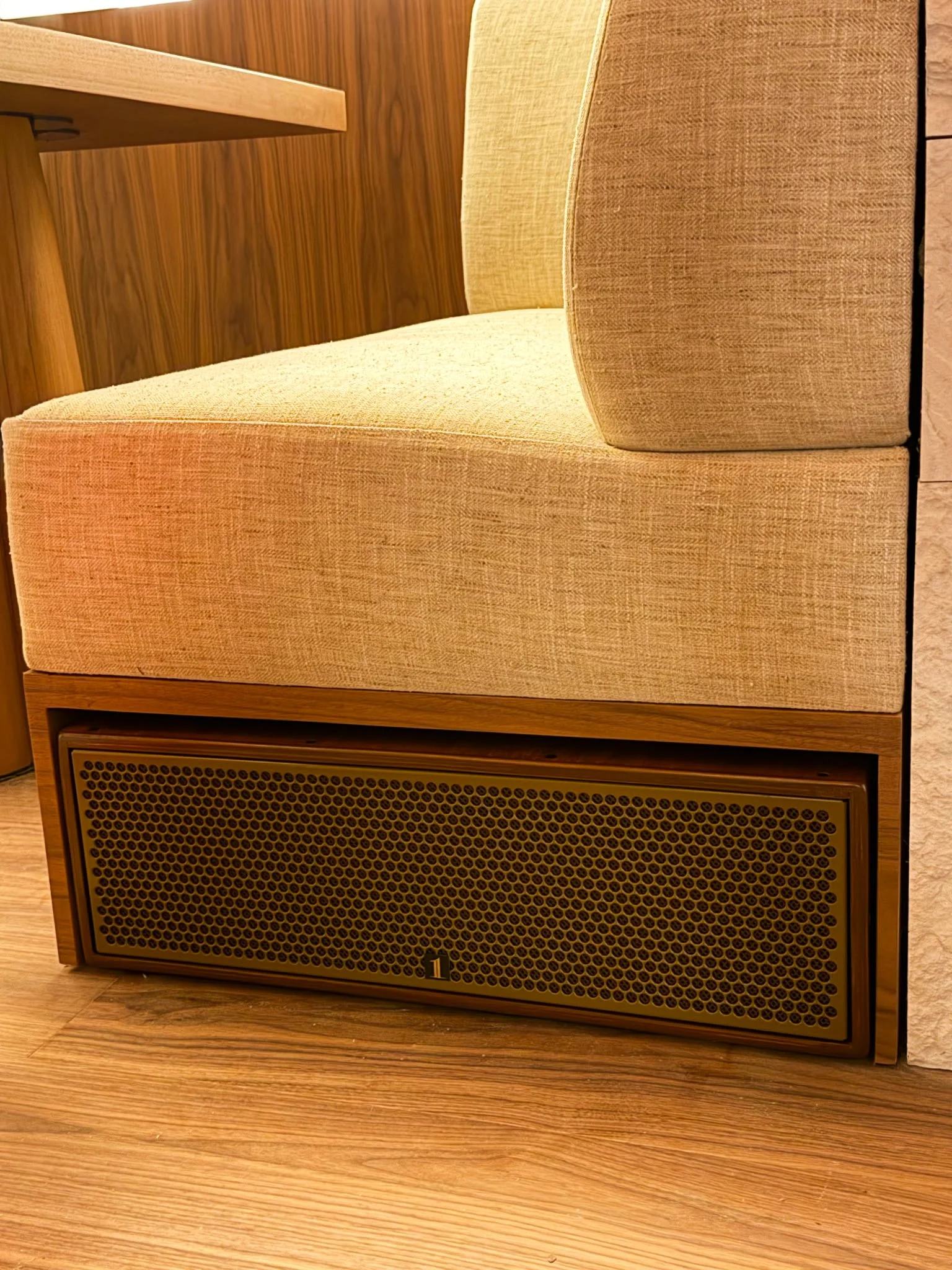
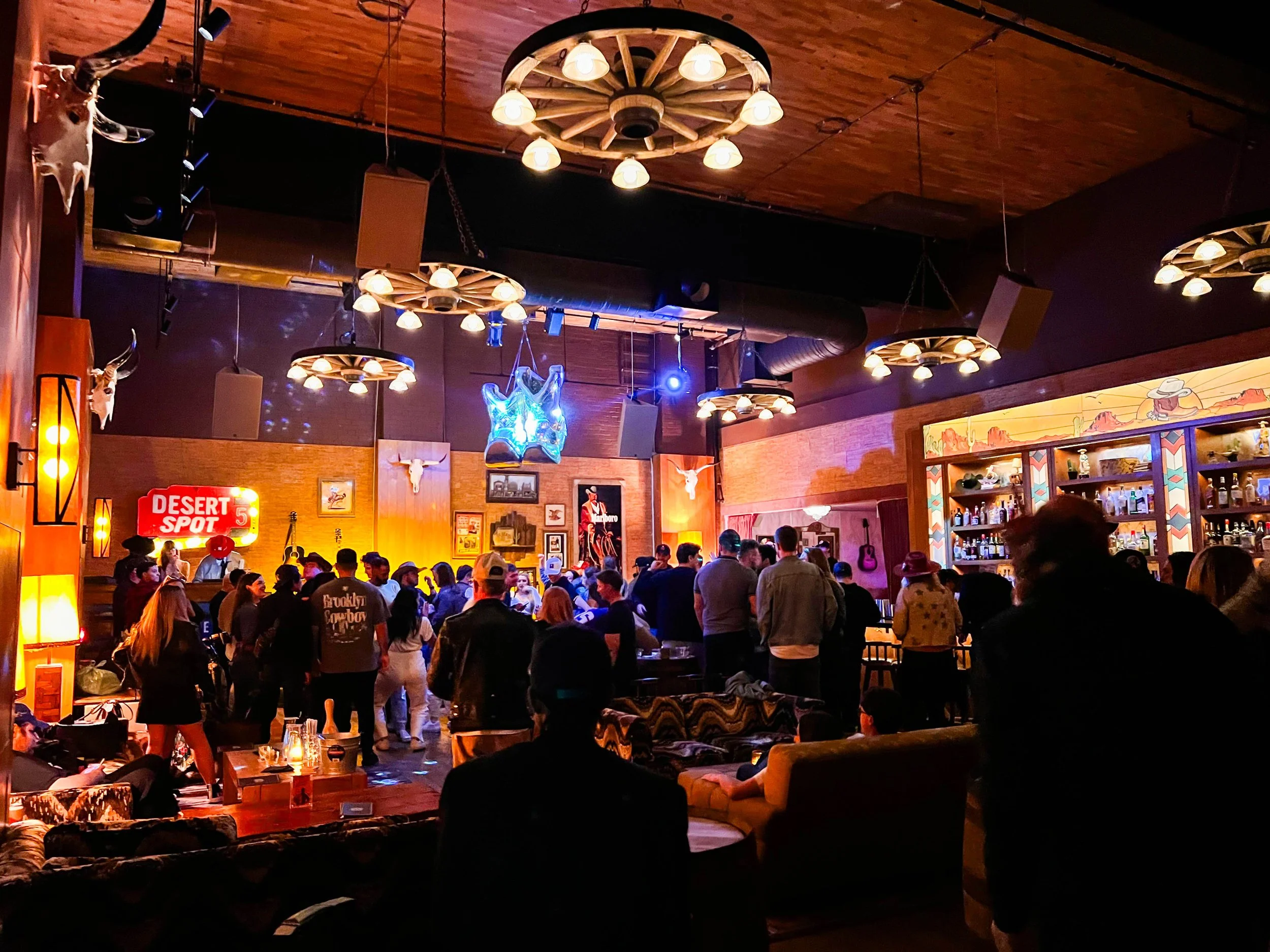
1 SOUND loudspeakers are designed with controlled, predictable off-axis performance, meaning the sound coverage is accurate in its dispersion patterns—not just directly in front of the speaker.
That translates into real, noticeable differences:
Even SPL across frequency ranges
Clear, high-fidelity sound without distortion
The ability to maintain energy and presence without overpowering conversation
And that last point is critical.
When guests don’t have to compete with the music—or raise their voices just to have a conversation—they stay longer. They relax. They order another round.
It’s not just about volume—it’s about eliminating the kind of distortion that makes people want to leave sooner than they planned.
This is where sonic quality stops being a technical detail—and becomes a business decision.
7. The Real Opportunity
Most venues think about sound at the end—after the layout, after the design, after everything else is decided.
But the research suggests something different: sound isn’t a finishing touch. It’s a lever.
It can influence:
How long people stay (by up to 25%)¹
How much they spend¹³
How they experience the space as a whole⁴
And unlike many other elements, it does all of this continuously, in the background.
Sound is already shaping behavior in every space.
The question is whether it’s doing so intentionally—or leaving it up to chance.
Because when music selection and sonic quality work together:
Guests stay longer
Conversations feel effortless
The environment feels better
And spending follows naturally
That’s not just good design.
That’s a competitive advantage.

Sources
¹ Milliman, R. (1986). The Influence of Background Music on Restaurant Behavior. Journal of Consumer Research.
² Malcman, L. et al. (2024). How Does Background Music Affect Dining Duration, Tips and Bill Amounts in Restaurants? Behavioral Sciences.
³ Grossman, R., & Rachamim, M. (2025). The Impact of Background Music on Spending and Price Perception.
⁴ Journal of Retailing and Consumer Services (2021). Effects of Music Tempo on Consumer Perception and Behavior.